
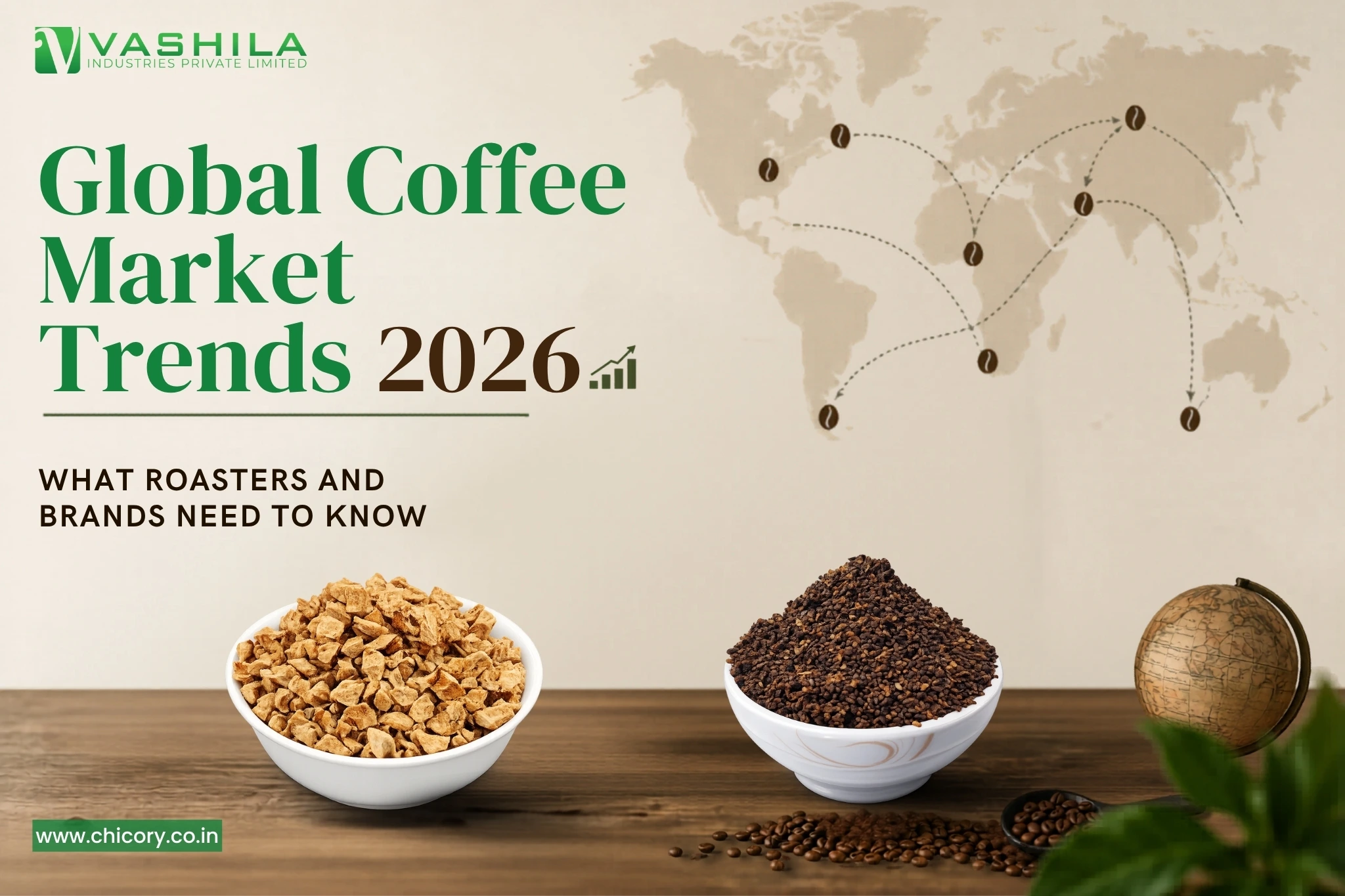
The global coffee industry is entering a transformative phase in 2026. From rising coffee bean prices and supply chain disruptions to sustainability requirements and changing consumer preferences, coffee businesses face both significant challenges and exciting opportunities.
For coffee roasters, beverage manufacturers, private-label brands, and ingredient suppliers, understanding these market trends is essential for maintaining profitability, securing reliable supply chains, and staying competitive in a rapidly evolving marketplace.
In this article, we explore the key coffee market trends shaping 2026 and what industry stakeholders need to know to prepare for the future.
The Global Coffee Market at a Glance
Coffee remains one of the world’s most traded agricultural commodities, with demand continuing to grow across established and emerging markets. This evolving landscape is also creating opportunities for ingredients such as instant chicory powder in modern beverage applications.
Several factors are contributing to the industry’s expansion:
- Growing coffee consumption in the Asia-Pacific markets
- Increased demand for specialty and premium coffee products
- Rising popularity of ready-to-drink beverages
- Expanding café culture in developing economies
- Innovation in coffee-based beverage formulations
While demand remains strong, supply-side challenges are creating new pressures throughout the value chain.
Coffee Bean Prices Continue to Rise
One of the most significant trends affecting the coffee industry in 2026 is continued price volatility.
Climate Change and Production Challenges
Major coffee-producing countries have experienced unpredictable weather conditions, including:
- Extended drought periods
- Irregular rainfall patterns
- Higher temperatures
- Increased pest and disease pressure
These environmental factors have impacted crop yields and reduced the availability of high-quality coffee beans.
Rising Operational Costs
Coffee producers and exporters are also facing:
- Higher labor costs
- Increased fertilizer prices
- Transportation expenses
- Energy cost inflation
As a result, coffee roasters and manufacturers are experiencing increasing pressure on profit margins.
What This Means for Brands
To remain competitive, many coffee businesses are:
- Diversifying sourcing regions
- Strengthening supplier relationships
- Optimizing product formulations
- Improving inventory planning
- Exploring alternative ingredient strategies
Sustainability Is No Longer Optional
Sustainability has evolved from a marketing advantage into a business necessity.
Consumers, retailers, and regulators increasingly expect transparency throughout the coffee supply chain.
Growing Demand for Ethical Sourcing
Modern consumers want to know:
- Where their coffee originates
- How farmers are compensated
- Whether environmental standards are followed
- What impact does production have on local communities
Brands that demonstrate responsible sourcing practices are gaining stronger consumer trust and loyalty.
Environmental Responsibility
Coffee companies are investing in:
- Sustainable farming partnerships
- Water conservation initiatives
- Carbon reduction programs
- Eco-friendly packaging solutions
- Supply chain traceability systems
Sustainability efforts are becoming a key factor in purchasing decisions for both consumers and business buyers. As a result, manufacturers are increasingly exploring responsibly sourced ingredients such as roasted chicory powder to support product innovation and long-term sustainability goals.
Premium Coffee Continues to Grow
Despite economic uncertainty, consumers continue to show interest in premium coffee experiences.
Demand for Specialty Coffee
The specialty coffee segment remains one of the fastest-growing categories in the industry.
Consumers increasingly seek:
- Unique flavor profiles
- Single-origin coffees
- Small-batch roasting
- Transparent sourcing stories
- High-quality brewing experiences
This trend presents opportunities for brands that focus on quality, authenticity, and differentiation.
The Rise of Coffee Education
Coffee drinkers today are more informed than ever.
Many consumers actively research:
- Coffee origins
- Processing methods
- Roast profiles
- Brewing techniques
- Sustainability credentials
Brands that educate their audience can create stronger engagement and long-term customer relationships.
Functional Beverages Are Reshaping Consumer Demand
Health and wellness trends continue to influence beverage purchasing decisions worldwide.
Consumers increasingly seek products that offer benefits beyond taste and caffeine.
Popular Functional Beverage Trends
Key areas of growth include:
○ Digestive wellness beverages
○ Energy-support drinks
○ Natural ingredient formulations
○ Reduced sugar beverages
○ Plant-based products
Manufacturers are responding by developing innovative formulations that align with changing consumer preferences, including the use of roasted chicory extract in instant beverage applications.
Opportunities for Beverage Brands
Companies that successfully combine functionality, taste, and convenience are likely to gain a competitive advantage in 2026 and beyond.
Technology Is Transforming Coffee Operations
Digital transformation is becoming increasingly important throughout the coffee supply chain.
Data-Driven Decision Making
Businesses are using technology to improve:
- Demand forecasting
- Procurement planning
- Inventory management
- Quality control
- Customer insights
Access to better data allows companies to respond more effectively to market fluctuations.
Automation and Efficiency
Automation technologies are helping manufacturers:
- Reduce operational costs
- Improve consistency
- Increase production efficiency
- Enhance product quality
As competition intensifies, operational efficiency will become a critical success factor.
Supply Chain Resilience Is a Top Priority
Recent market disruptions have highlighted the importance of building resilient supply chains.
Diversification of Supply Sources
Many coffee businesses are reducing dependence on single sourcing regions by developing relationships with multiple suppliers.
Benefits include:
- Reduced supply risk
- Greater pricing flexibility
- Improved business continuity
- Better access to quality raw materials
Strategic Partnerships
Long-term supplier partnerships are becoming increasingly valuable.
Strong relationships help ensure:
♦ Consistent quality
♦ Reliable deliveries
♦ Better market visibility
♦ Greater stability during periods of volatility
Emerging Markets Offer New Growth Opportunities
While North America and Europe remain major coffee-consuming regions, emerging markets are creating new opportunities for growth.
Asia-Pacific Expansion
Countries across Asia continue to experience rising coffee consumption driven by:
– Urbanization
– Growing middle-class populations
– Western lifestyle influences
– Expanding café culture
Middle East Growth
The Middle East is also witnessing increased demand for premium coffee products and specialty coffee experiences.
These regions represent significant opportunities for exporters, roasters, and beverage manufacturers seeking long-term growth.
Innovation Will Define the Future of Coffee
The coffee industry is becoming increasingly competitive, making innovation more important than ever.
Brands are investing in:
- New beverage formats
- Sustainable packaging
- Functional ingredients
- Product differentiation
- Consumer experience enhancements
Companies that adapt quickly to changing market conditions will be better positioned for success.
What Coffee Brands Should Focus on in 2026
To remain competitive in a changing marketplace, coffee businesses should prioritize:
Strengthening Supply Chains
Build relationships with trusted suppliers and diversify sourcing strategies.
Investing in Sustainability
Develop transparent and environmentally responsible sourcing programs.
Monitoring Consumer Trends
Stay informed about evolving preferences and purchasing behaviors.
Embracing Technology
Leverage data and automation to improve operational efficiency.
Driving Product Innovation
Create differentiated products that address emerging market demands.
Conclusion
The global coffee market in 2026 presents both challenges and opportunities for roasters, manufacturers, and beverage brands.
Rising coffee prices, sustainability expectations, supply chain complexity, and evolving consumer preferences are reshaping the industry landscape. At the same time, innovation, technology, and growing demand in emerging markets are creating new pathways for growth.
Businesses that invest in resilient supply chains, sustainable sourcing practices, and market-driven innovation will be best positioned to succeed in the years ahead. Collaborating with a reliable chicory manufacturer can also help coffee brands diversify formulations and strengthen their ingredient sourcing strategies.
As the coffee industry continues to evolve, staying informed about market trends will be essential for making smarter sourcing, production, and business decisions.
The biggest trends include rising coffee bean prices, sustainability initiatives, specialty coffee growth, functional beverage innovation, supply chain resilience, and technology-driven operations.
Coffee prices are being influenced by climate-related production challenges, higher labor costs, logistics expenses, and growing global demand.
Consumers and business buyers increasingly expect ethical sourcing, environmental responsibility, and supply chain transparency, making sustainability a key business priority.
Asia-Pacific and the Middle East are emerging as important growth markets due to increasing coffee consumption and expanding café culture.
Brands can remain competitive by strengthening supply chains, embracing sustainability, leveraging technology, monitoring consumer trends, and investing in product innovation.